

Art history is shaped by changing ideas, cultures, technologies, and social conditions. Across centuries, artists have developed new ways to represent people, nature, emotions, politics, and everyday life. These changes gave rise to major art movements, each with its own visual language, philosophy, techniques, and influence.
Understanding these movements makes it easier to appreciate why artworks from different periods look and feel so different. For readers interested in exploring art, culture, and creative expression, Peachandblackplus.com can also be a useful place to discover broader perspectives on visual style and contemporary interests.
What Is an Art Movement?
An art movement is a group of artists or a period in which artworks share recognizable ideas, techniques, subjects, or philosophies. Movements often develop partly in response to earlier artistic traditions.
Some movements lasted for centuries, while others were relatively short-lived. They also frequently overlapped. An artist could be influenced by multiple movements rather than belonging exclusively to one.
Art movements are therefore best understood as broad categories that help explain changes in artistic thinking rather than strict rules that every artist followed.
Renaissance
The Renaissance, which began in Europe during the 14th century and flourished particularly during the 15th and 16th centuries, is one of the most influential periods in Western art history.
Renaissance artists became increasingly interested in classical Greek and Roman ideas, humanism, scientific observation, anatomy, and realistic representation.
Artists such as Leonardo da Vinci, Michelangelo, and Raphael became famous for works demonstrating sophisticated approaches to perspective, proportion, composition, and the human figure.
The Renaissance also saw major developments in techniques such as linear perspective and the use of light and shadow. Artists sought to create more convincing three-dimensional spaces and realistic representations of people and environments.
Baroque
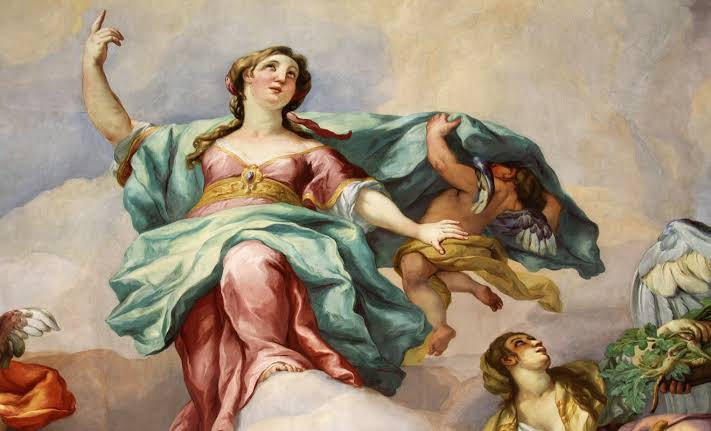
Baroque art emerged in Europe during the late 16th and early 17th centuries. It was characterized by drama, movement, emotional intensity, rich detail, and strong contrasts between light and dark.
Baroque artists often created compositions designed to capture attention immediately. Religious subjects were particularly important in many regions, although portraiture, mythology, landscapes, and everyday scenes were also explored.
Caravaggio became particularly influential for his dramatic lighting and realistic figures. Peter Paul Rubens was known for energetic compositions and dynamic figures, while Rembrandt developed distinctive approaches to portraiture, light, and psychological expression.
Rococo
Rococo developed in the early 18th century, particularly in France, partly as a reaction against the grandeur and seriousness associated with Baroque art.
Rococo works are often associated with lighter colors, decorative details, playful themes, elegance, and scenes of leisure.
The movement was especially influential in painting, interior design, furniture, and decorative arts. Artists frequently portrayed social gatherings, romance, gardens, entertainment, and aristocratic life.
Although Rococo was sometimes criticized for its decorative excess, it remains an important part of European art and design history.
Neoclassicism
Neoclassicism emerged during the 18th century and returned to the visual principles associated with ancient Greece and Rome.
Artists emphasized order, balance, clarity, discipline, and idealized forms. The movement was influenced by renewed archaeological interest in ancient civilizations and by Enlightenment ideas.
Neoclassical paintings often featured historical, mythological, and moral subjects. Jacques-Louis David became one of the best-known representatives of the movement, producing works with carefully structured compositions and strong classical references.
Romanticism
Romanticism developed partly as a reaction against the rationality, order, and restraint associated with Neoclassicism.
Romantic artists emphasized emotion, imagination, nature, individual experience, and the sublime. Paintings often depicted dramatic landscapes, historical events, storms, distant places, and powerful emotional moments.
Artists such as J.M.W. Turner explored light, atmosphere, and the overwhelming power of nature, while Eugène Delacroix became known for expressive compositions and dramatic color.
Romanticism demonstrated that art could communicate intense emotional experiences rather than simply reproduce the visible world.
Realism
Realism emerged during the 19th century as artists increasingly turned their attention toward ordinary life.
Instead of focusing primarily on mythology, aristocratic subjects, or idealized historical scenes, Realist artists depicted workers, rural communities, urban life, and everyday experiences.
Gustave Courbet was a major figure in the movement. His work challenged traditional expectations about which subjects were considered worthy of serious art.
Realism helped broaden the range of subjects artists could explore and influenced later developments in modern art.
Impressionism
Impressionism transformed painting during the late 19th century.
Artists associated with the movement were interested in capturing changing light, atmosphere, color, and the visual impression of a particular moment. They often painted outdoors and used visible brushstrokes rather than attempting to create completely smooth surfaces.
Claude Monet, Pierre-Auguste Renoir, Edgar Degas, and Berthe Morisot are among the artists strongly associated with Impressionism.
Impressionist works frequently depict landscapes, city scenes, leisure activities, gardens, and everyday modern life.
The movement challenged established academic standards and helped open the door to many later experiments in painting.
Post-Impressionism
Post-Impressionism developed after Impressionism and included artists who wanted to move beyond its approach while retaining some of its innovations.
Vincent van Gogh, Paul Cézanne, Paul Gauguin, and Georges Seurat are commonly associated with Post-Impressionism, although their styles were significantly different from one another.
Van Gogh used expressive brushwork and intense colors to communicate emotion. Cézanne explored structure and form, while Seurat developed a method based on small points of color.
Post-Impressionism was particularly important because it influenced several major movements of the 20th century.
Cubism
Cubism emerged in the early 20th century and fundamentally changed how artists represented objects.
Pablo Picasso and Georges Braque were central figures in the movement. Instead of presenting objects from a single conventional viewpoint, Cubist artists fragmented forms and represented multiple perspectives within a single composition.
Cubism reduced familiar objects to geometric shapes and encouraged viewers to reconsider how reality could be represented.
Its influence extended beyond painting into sculpture, graphic design, architecture, and other creative fields.
Surrealism
Surrealism emerged in the 1920s and explored dreams, the unconscious mind, imagination, and unexpected combinations of imagery.
Salvador Dalí became one of the movement’s most recognizable artists, particularly for his strange and dreamlike scenes. René Magritte also created works that challenged assumptions about objects, language, and visual reality.
Surrealist artists often attempted to move beyond conventional logic. Their work demonstrated how art could explore psychological experiences and ideas that were difficult to represent through ordinary realism.
Expressionism
Expressionism focused heavily on emotional experience rather than accurate visual representation.
Artists often used distorted forms, exaggerated colors, dramatic lines, and unconventional compositions to communicate feelings such as anxiety, isolation, excitement, or fear.
Expressionism developed in various forms, particularly in Germany and other parts of Europe. Its influence extended across painting, printmaking, theater, literature, architecture, and film.
The movement demonstrated that distortion could be intentional and meaningful rather than simply an artistic mistake.
Abstract Art
Abstract art moved further away from direct representation of recognizable subjects.
Instead of attempting to reproduce people, landscapes, or objects realistically, abstract artists explored color, shape, line, texture, rhythm, and composition.
Wassily Kandinsky is frequently associated with the development of abstraction, while Piet Mondrian explored geometric forms and carefully organized compositions.
Abstract art can take many forms, from highly structured geometric work to expressive compositions based largely on color and gesture.
Dada
Dada developed during the First World War as an intentionally unconventional response to the social and cultural conditions of the period.
Dada artists challenged traditional definitions of art and often embraced absurdity, humor, chance, and anti-establishment ideas.
Marcel Duchamp’s famous use of ordinary manufactured objects as art challenged assumptions about artistic skill and authorship.
Dada’s influence became particularly important for later conceptual and experimental art.
Pop Art
Pop Art emerged prominently during the 1950s and 1960s, particularly in Britain and the United States.
Artists associated with the movement incorporated imagery from advertising, consumer products, celebrities, comics, packaging, and popular culture.
Andy Warhol became one of the best-known Pop Art figures through works that transformed familiar commercial imagery into subjects for artistic examination.
Pop Art blurred the boundaries between fine art and mass culture while encouraging audiences to reconsider everyday visual experiences.
Minimalism
Minimalism developed during the 1960s and emphasized simplicity, geometric forms, repetition, and the physical qualities of materials.
Minimalist artists often removed unnecessary decoration and focused on basic structures.
The movement was influential not only in visual art but also in sculpture, architecture, furniture, and design. Its emphasis on simplicity continues to influence contemporary aesthetics.
Contemporary Art
Contemporary art encompasses a wide range of practices from the late 20th century to the present. Unlike movements with relatively clear boundaries, contemporary art includes numerous approaches and often crosses traditional categories.
Artists may work with painting, sculpture, photography, video, digital technology, installation, performance, mixed media, or interactive formats.
Contemporary artists frequently explore subjects such as identity, technology, globalization, environmental issues, politics, culture, and social change.
Because contemporary art is still developing, its major movements and defining characteristics continue to evolve.
Why Art Movements Matter
Learning about art movements provides more than a list of historical styles. It helps explain how artists responded to the world around them.
Wars, scientific discoveries, political changes, technological developments, economic conditions, and cultural shifts have all influenced artistic expression.
Art movements also demonstrate that creativity is constantly evolving. New artists rarely work in complete isolation; they build upon, challenge, reinterpret, or reject ideas that came before them.
The Metropolitan Museum of Art provides an extensive timeline and educational resources for exploring art history and different periods and cultures.
How to Explore Art Movements Today
A useful way to study art history is to compare movements rather than examining each one independently. Look at how artists treated similar subjects differently across periods.
For example, compare how Renaissance artists approached the human figure with the fragmented forms of Cubism or the emotional distortions of Expressionism.
It can also be helpful to study the historical circumstances surrounding each movement. Understanding the culture and events of a particular period often makes the artworks much easier to interpret.
Most importantly, art history should not be treated as a rigid sequence of styles. Movements overlap, influence one another, and sometimes develop simultaneously in different regions.
Conclusion
The major art movements in history represent changing approaches to creativity, culture, and human experience. From the realism and humanism of the Renaissance to the emotional intensity of Romanticism and Expressionism, the experimentation of Cubism and Surrealism, and the cultural commentary of Pop Art and contemporary art, each movement contributed something distinctive.
Studying these movements helps viewers understand not only what artists created but also why they created it. It reveals how art responds to society while continuing to challenge expectations, introduce new ideas, and shape the way people see the world.